
Bitcoin sinks below $87,000 in the post-Christmas trading period, marking a notable shift in investor sentiment while precious metals embarked on an extraordinary rally. This divergence between digital assets and traditional safe-haven investments reveals a fundamental reshaping of market dynamics that investors cannot afford to ignore.
As trading resumed after the Christmas holiday, Bitcoin plummeted to levels not seen since early December, currently hovering around $86,700 to $87,200. The decline represents approximately thirty percent from its October peak of $126,000, sending ripples of concern throughout the digital asset community. Meanwhile, gold, silver, and copper have surged to unprecedented heights, creating one of the most striking market contrasts in recent memory.
Why Bitcoin Sinks Below $87,000
The cryptocurrency market’s post-Christmas downturn stems from multiple converging factors that have collectively pressured digital asset prices. Market analysts point to a perfect storm of institutional outflows, derivative market mechanics, and broader macroeconomic uncertainties that have conspired to push Bitcoin below $87,000 and keep it range-bound.
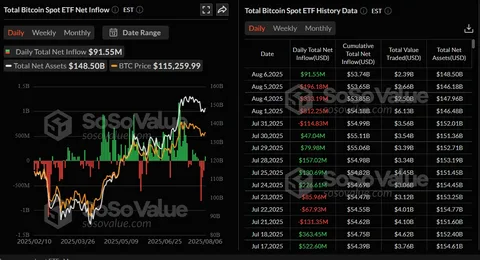
Institutional investors have notably pulled back from cryptocurrency exposure through spot exchange-traded funds. Data reveals that Bitcoin ETFs recorded three consecutive weeks of net outflows, with December twenty-third alone witnessing $186.6 million leaving the market. BlackRock led these withdrawals with $157.3 million in outflows, followed by significant redemptions from Fidelity and Grayscale. This institutional retreat signals a temporary rotation away from digital assets as money managers rebalance portfolios ahead of year-end reporting requirements.
The derivatives market has added another layer of complexity to Bitcoin’s price action. The largest Bitcoin options expiry in history occurred on Deribit, involving over $23.6 billion worth of contracts across nearly 268,000 positions. Options expiries of this magnitude typically create substantial price volatility, particularly during periods of thin liquidity characteristic of holiday trading weeks. Market makers hedging their gamma exposure effectively pinned Bitcoin prices within the $85,000 to $90,000 range, creating artificial resistance levels that prevented meaningful breakouts in either direction.
Chinese regulatory actions have further intensified selling pressure on Bitcoin markets. Authorities shut down large-scale mining operations in Xinjiang earlier in December, forcing approximately 400,000 miners offline virtually overnight. This dramatic disruption caused Bitcoin’s network hashrate to plummet by roughly eight percent, representing a genuine operational shock to the system. Displaced miners facing relocation costs and lost revenue often liquidate Bitcoin holdings to cover immediate expenses, adding authentic selling pressure that extends beyond speculative trading dynamics.
The Fear and Greed Index Reveals Market Psychology
The Crypto Fear and Greed Index has plunged to twenty-seven, firmly placing market sentiment in “fear” territory without yet triggering panic-driven capitulation. This psychological indicator synthesizes multiple data points including volatility metrics, trading volume patterns, social media sentiment, and momentum measurements to gauge overall market emotion. Current readings suggest investors remain cautiously defensive rather than desperately bearish.
Historical patterns indicate that extreme fear readings often represent contrarian buying opportunities for long-term investors. When widespread pessimism dominates market psychology, assets frequently trade below their fundamental value as short-term fear overwhelms rational analysis. However, the absence of disorderly selling or liquidation cascades suggests that Bitcoin sinks below $87,000 represents controlled de-risking rather than systemic breakdown.
Total cryptocurrency market capitalization has stabilized near $2.94 trillion despite Bitcoin’s weakness, while daily trading volumes have contracted to approximately $90.6 billion. These figures reflect lighter market participation as traders step away during the holiday period, amplifying the impact of marginal flows. In such environments, relatively modest buy or sell orders can trigger exaggerated price movements, increasing short-term volatility while potentially creating attractive entry points for patient investors.
Precious Metals Rally Creates Historic Contrast
Gold prices have steadily climbed throughout twenty twenty-four, finishing the year with gains exceeding seventy percent from their early-year levels. The yellow metal now trades above $2,600 per ounce, solidifying its status as the premier safe-haven asset during periods of economic and geopolitical uncertainty. Central banks worldwide have continued aggressive gold accumulation programs, adding to investment demand from both institutional and retail participants seeking protection against currency debasement and inflation risks.
Silver’s performance has proven even more spectacular, with prices more than doubling to surpass $70 per troy ounce by late December. This remarkable acceleration reflects silver’s dual nature as both a precious metal investment vehicle and critical industrial commodity. The photovoltaic industry alone now consumes approximately fifty-five percent of total global silver demand, up dramatically from twenty percent just three years ago. Electric vehicle production, artificial intelligence server infrastructure, and renewable energy installations all require substantial silver inputs, creating structural demand growth that shows no signs of abating.
Copper has joined the metals rally with particular vigor, breaching $12,000 per ton on the London Metal Exchange for the first time in recorded history. The industrial metal’s surge stems from genuine supply constraints combined with robust demand projections tied to electrification and infrastructure buildout. Major copper-producing regions including Chile and Indonesia have faced operational disruptions and environmental challenges that have crimped global production growth. Simultaneously, the transition toward renewable energy, electric vehicles, and expanded power grids requires massive copper inputs that existing supply cannot easily accommodate.
Analyzing the Great Rotation from Crypto to Metals
Gold’s surge carries particular significance given its long-standing role as the ultimate safe-haven investment. When traditional financial assets face pressure and confidence in fiat currencies wavers, gold historically attracts capital flows seeking preservation rather than growth. The metal’s twenty-seven percent gain in twenty twenty-four occurred despite relatively stable economic conditions in major developed markets, suggesting investors anticipate future challenges that have not yet fully materialized in conventional risk metrics.
Silver’s outperformance relative to gold demonstrates how industrial demand narratives can amplify precious metal rallies. The Silver Institute projects the global silver market will face severe deficits in twenty twenty-five, marking the fifth consecutive year of supply shortfalls. Physical shortages combined with investment demand create powerful price dynamics, particularly when exchange-traded fund inflows and retail buying further tighten available supply. London Metal Exchange silver inventories have collapsed approximately seventy-five percent from their twenty nineteen peak, creating genuine scarcity that supports sustained price appreciation.
The copper rally reinforces themes of supply tightness and electrification demand across multiple sectors. Analysts at J.P. Morgan project copper prices will reach $12,500 per metric ton by mid-twenty twenty-six, driven by persistent deficits and constrained mine supply growth. Deutsche Bank warns that output from the world’s largest mining companies could decline three percent in twenty twenty-five and potentially fall again in twenty twenty-six, exacerbating supply-demand imbalances. These fundamental dynamics differ markedly from cryptocurrency markets, where supply remains predictable but demand fluctuates wildly based on sentiment and speculation.
Bitcoin Dominance and Altcoin Weakness Signal Crypto Flight to Quality
Even as Bitcoin below $87,000 represents a significant decline from recent peaks, the leading cryptocurrency has actually strengthened relative to alternative digital assets. Bitcoin dominance has climbed to 59.1 percent of total cryptocurrency market capitalization, while Ethereum’s share sits near twelve percent. This concentration reflects capital flowing toward the most established and liquid cryptocurrency even amid broader market weakness.
The Altcoin Season Index reading of eighteen out of one hundred confirms that alternative cryptocurrencies are experiencing particularly severe selling pressure. Ethereum has declined more than six percent to below $2,900, while Solana dropped nearly seven percent during the post-Christmas trading session. Dogecoin and other meme tokens have suffered even steeper losses, highlighting how speculative positions get liquidated most aggressively during risk-off periods.
This flight to relative quality within cryptocurrency markets suggests investors retain some confidence in Bitcoin’s long-term value proposition even while reducing overall digital asset exposure. Bitcoin benefits from superior liquidity, broader institutional acceptance, and established track record compared to newer or more experimental tokens. However, the inability of even Bitcoin to maintain support above key psychological levels indicates that broad-based cryptocurrency weakness remains the dominant market theme.
Technical Analysis Suggests Range-Bound Trading Ahead
From a technical perspective, Bitcoin sinks below $87,000 represents movement within a well-defined descending channel that has guided price action since early December. The cryptocurrency continues to form lower highs while buyers defend support near the $86,500 to $86,700 zone. This pattern indicates corrective rather than impulsive price movements, suggesting consolidation rather than capitulation.
The fifty-period exponential moving average remains below the hundred-period average on shorter timeframes, confirming near-term bearish momentum. However, both averages have flattened considerably, indicating that downward pressure is moderating rather than accelerating. Recent candlestick formations show small real bodies with frequent wicks in both directions, alongside multiple spinning tops that signal compression and indecision among market participants.
The Relative Strength Index hovering near forty-three displays bullish divergence, forming higher lows even as price continues testing support levels. This momentum indicator divergence often precedes trend reversals, though confirmation requires actual price breakouts above established resistance zones. Traders are closely monitoring the $85,000 level as critical near-term support, with sustained breaks potentially opening doors to deeper retracements toward the low-eighty-thousands or below.
Market participants expect increased volatility once current options positioning rolls off. Aggregate open interest across cryptocurrency derivatives markets remains elevated near $760 billion, dominated by perpetual futures contracts. This elevated leverage combined with compressed price ranges typically precedes sharp directional moves as positions unwind. A sustained breakout above $90,000 could trigger short gamma covering toward $92,700 or higher, while failure to hold $85,000 support might accelerate selling toward deeper retracement levels.
Historical Context Provides Hope for Bitcoin Bulls
Despite current weakness that has Bitcoin below $87,000, historical patterns offer some encouragement for long-term cryptocurrency bulls. Bitcoin trades approximately 6.8 percent lower year-to-date and nearly thirty percent below its twenty twenty-five peak after opening near $94,120. Notably, Bitcoin has declined 7.5 percent since Christmas Eve twenty twenty-four, creating parallels with previous cyclical bottoms.
In the past three instances when Bitcoin ended Christmas Eve lower year-over-year, the following year delivered average gains around one hundred percent. Those episodes saw declines ranging from 51.4 to 70.8 percent followed by subsequent rebounds of 40.9 to 159.8 percent. If historical patterns repeat, conservative twenty twenty-six scenarios could see Bitcoin reaching $125,000 to $150,000, while more bullish outcomes might push toward $175,000 to $200,000 or beyond.
Structural factors supporting long-term cryptocurrency optimism remain intact despite short-term weakness. Institutional participation continues expanding through spot Bitcoin ETFs and broader regulatory clarity, particularly with the incoming Trump administration viewed as more crypto-friendly than previous leadership. Bitcoin’s four-year halving cycle, while somewhat disrupted by front-running dynamics this iteration, has historically preceded major bull markets after initial post-halving consolidation periods.
However, skeptics argue that Bitcoin increasingly appears as “yesterday’s trade” relative to artificial intelligence and other cutting-edge technologies capturing investor imagination. If cryptocurrency fails to demonstrate renewed use-case expansion or adoption milestones, sustained enthusiasm erosion could lead to persistent price weakness regardless of historical cycle patterns. The risk remains that Bitcoin enters an extended consolidation phase or even secular decline if it cannot recapture narrative momentum.
Metals Supply Constraints Support Continued Price Strength
Unlike cryptocurrency markets where supply remains algorithmically determined and transparent, precious metals and industrial commodities face genuine physical constraints that support bullish price outlooks. The World Bank projects base metal prices will increase almost two percent over twenty twenty-six and twenty twenty-seven, with aluminum, nickel, tin, and copper expected to see the largest gains. Both copper and tin are projected to reach new record highs in nominal dollar terms, driven by persistent supply limitations and clean-energy demand growth.
Mine supply growth for critical metals remains severely constrained by operational disruptions, declining ore grades, and years of underinvestment in exploration and development. The Grasberg mine incident in Indonesia, combined with challenges across Chilean operations, has highlighted the vulnerability of global copper supply chains. Deutsche Bank analysis warns that major mining companies face production declines rather than growth, with output potentially falling three percent in twenty twenty-five and potentially again in twenty twenty-six.
Silver faces particularly acute supply-demand imbalances given its concentration in photovoltaic manufacturing. The Solar Energy Industries Association projects continued robust growth in solar panel installations globally, requiring escalating silver inputs that mining output cannot match. The Silver Institute forecasts market deficits will persist through twenty twenty-five and likely beyond, creating fundamental support for sustained price appreciation regardless of short-term sentiment fluctuations.
Gold’s supply dynamics differ given its primary role as monetary metal rather than industrial commodity, yet central bank accumulation provides structural demand that shows no signs of abating. Monetary authorities in China, Russia, India, and numerous emerging markets continue diversifying reserves away from dollar-denominated assets toward physical gold. This sustained official sector demand establishes a price floor that prevents significant corrections even when private investment interest wanes.
Federal Reserve Policy Remains Critical Variable
Both cryptocurrency and precious metals markets remain acutely sensitive to Federal Reserve monetary policy decisions, though they often respond in opposite directions. The central bank’s rate-cutting trajectory significantly influences opportunity costs for non-yielding assets like Bitcoin and gold, while also affecting dollar strength and real interest rate calculations that drive investment flows.
Markets currently price approximately fifty basis points of Federal Funds Rate reductions during twenty twenty-six, down substantially from earlier expectations. The Fed’s most recent projections indicated a one hundred basis point cut planned for twenty twenty-four plus another hundred basis points in twenty twenty-five, but actual policy has proven less accommodative than initially signaled. Inflation persistence and labor market resilience have forced the central bank to maintain tighter financial conditions longer than many anticipated.
The incoming Trump administration’s policy agenda introduces additional complexity for Federal Reserve decision-making. Proposed tariffs, tax cuts, and deregulation initiatives all carry inflationary implications that could constrain the central bank’s ability to lower rates aggressively. Higher tariffs raise import costs directly, while tax cuts and deregulation might stimulate economic activity that generates demand-pull inflation. These cross-currents could force the Fed to keep policy more restrictive than would otherwise be warranted based solely on current economic data.
Gold typically benefits from lower real interest rates, as the opportunity cost of holding non-yielding assets diminishes when bond yields decline. However, this relationship has weakened somewhat as bond market uncertainty has risen, with higher volatility in fixed-income markets reducing gold’s negative sensitivity to yield movements. Bitcoin’s relationship with interest rates remains less established and potentially more complex, as the cryptocurrency trades simultaneously as technology investment, speculative asset, and alternative monetary instrument.
Geopolitical Tensions Favor Safe-Haven Assets
Escalating geopolitical conflicts and tensions provide consistent support for safe-haven assets like gold while creating headwinds for risk assets including cryptocurrencies. The Russia-Ukraine war continues without clear resolution pathways, while Middle East tensions between Israel and Iran plus associated proxy conflicts maintain elevated regional instability. These ongoing confrontations generate persistent risk premiums in commodity and currency markets.
Trade policy uncertainty represents another significant geopolitical factor influencing market dynamics. The incoming U.S. administration has signaled intentions to implement broad tariff programs that could disrupt established supply chains and trading relationships. These potential policy changes create planning challenges for businesses and investment uncertainties for financial markets, typically favoring defensive positioning over aggressive risk-taking.
China’s economic trajectory carries particular significance given its dominant role in both cryptocurrency markets and commodity consumption. Persistent weakness in China’s property sector continues weighing on construction-related materials demand, yet government stimulus efforts and accelerating renewable energy investments provide offsetting demand drivers. How Chinese policymakers navigate their economy’s structural challenges will substantially influence both digital asset and commodity market outcomes.
Looking Ahead: What Investors Should Watch
As markets digest the post-Christmas period where Bitcoin sinks below $87,000 while metals soar, several key factors will determine whether current trends extend or reverse. Cryptocurrency investors should monitor Bitcoin’s ability to hold the $85,000 to $86,500 support zone, as decisive breaks below this range could trigger accelerated selling toward the low-eighties or even $70,000 to $56,000 levels that some analysts identify as potential deeper retracement targets.
Institutional flow dynamics will prove crucial for cryptocurrency market direction. If spot ETF outflows persist through January, it would signal sustained institutional de-risking that could pressure prices regardless of technical support levels. Conversely, any resumption of institutional buying could quickly reverse sentiment given how compressed positioning has become during the holiday consolidation period.
For precious metals, investors should track Federal Reserve communications and economic data releases that might influence interest rate expectations. Stronger-than-expected inflation readings or resilient labor markets could force the central bank to maintain restrictive policy longer, potentially creating headwinds for gold despite geopolitical support. Industrial metals like copper and silver will remain sensitive to Chinese economic data and global manufacturing activity indicators.
Supply-side developments in metals markets warrant close attention, as unexpected production disruptions or new mine closures could further tighten already-constrained markets. Conversely, any easing of supply challenges or acceleration of new production could relieve upward price pressures. The balance between clean-energy demand growth and mining supply responses will substantially influence how long the current metals rally can persist.
Conclusion
The stark contrast between cryptocurrency weakness and precious metals strength as Bitcoin sinks below $87,000 reveals fundamental shifts in investor risk appetite and asset allocation preferences. Digital assets face genuine headwinds from institutional outflows, regulatory uncertainties, and competitive pressures from alternative technologies, while traditional commodities benefit from supply constraints and structural demand growth tied to energy transition and economic development.
Investors navigating these divergent market signals should maintain disciplined approaches focused on fundamentals rather than short-term price movements. Cryptocurrency bulls must honestly assess whether current weakness represents healthy consolidation within intact long-term trends or signals more troubling erosion of Bitcoin’s investment narrative. Those attracted to precious metals should understand that parabolic rallies inevitably experience corrections, even when underlying fundamentals remain supportive.
The post-Christmas market environment where Bitcoin below $87,000 coexists with record metal prices may persist through year-end and into early twenty twenty-six, as investors position portfolios for uncertain macroeconomic and geopolitical landscapes. Successful investing in such environments requires flexibility, risk management discipline, and willingness to adjust strategies as new information emerges rather than rigidly adhering to predetermined views regardless of changing circumstances.
Whether you’re monitoring Bitcoin sinks below $87,000 as a buying opportunity or viewing precious metals rallies as signals to reallocate portfolios, this market divergence demands attention. Stay informed about cryptocurrency market dynamics, precious metals trends, and macroeconomic developments that will shape asset prices throughout twenty twenty-six. The current environment offers both risks to manage and opportunities to capture for investors who approach markets with clear strategies and appropriate risk controls.